Showing posts with label biology. Show all posts

Sunday, April 26, 2009

What's Going On Here?

Calling all Biology students! Out by your butterfly garden, I noticed something happening that you are learning about in this week's chapter about plants.
Here is a plant in the genus Oxalis in the shade:


And here is the same kind of plant in the sun:


Can you tell me what is happening here?

Tuesday, April 7, 2009

Let's Take A Walk

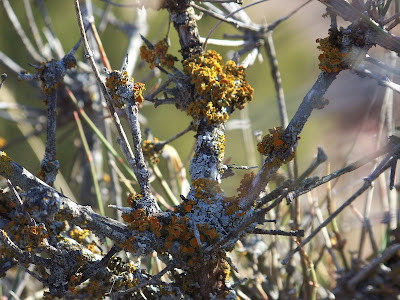
Spring is upon us - more or less. :) And depending on whether or not there are hurricane force winds outside, you may have gotten a chance to walk around outside some and notice a few things. If you are in Biology right now, you might start noticing some things we've been learning about in class. For example, on a shrub along the Brazos river, I saw this thing...What is it? What kingdom is it from?

You're right, I just asked you a trick question. This organism is actually from two kingdoms - it's part fungus and part algae - a symbiotic relationship known as a "lichen."

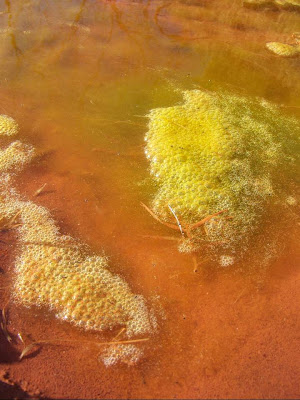
Not too far from the lichen, I saw this thing...

Whoa!! What is that?!!? The Blob? Maybe you need a bigger picture to figure it out...


Still don't know? Let's try an even bigger picture...


Those green blobs aren't blobs at all - they are algae. And if you go back to the first picture of "the blob," you'll see that it is using it's photosynthetic skills like the sun won't shine tomorrow. See all of those bubbles? What gas do you suppose is in them? To answer that question, you've got to think back to the chemical equation for photosynthesis:
Light + Water + Carbon dioxide --> Sugar + Oxygen
That's why algae can be good for water ecosystems. It is not only part of the food chain, but it oxygenates water for other organisms.
And even the Blob can't do that.

Monday, March 2, 2009

Do Something

The last few chapters in our Biology book have made us very aware of some of the difficult issues (like acid rain, ozone depletion, global warming, chemical pollution, loss of resources and population growth) we face on our planet that will have to be addressed if we are going to be able to keep Earth so that it can sustain our growing population.

Believe it or not, as big as these issues are, there are actually a lot of things you can do to start working toward our new goals of protecting our life on this planet. If you will look over to the right hand menu over there, you will see a new "widget" called the "Act Now Matrix." This cool little tool is from DoSomething.org and lets you pick from a list of lots of pressing issues we have, and see lists of things you can do about your issue, all organized by the size of the group of people you are working with and where you want to work on your issue.

Here's what I want you to do:

1. Pick one of these issues that we learned about in class:
  • Acid Rain
  • Ozone
  • Global Temperature
  • Chemical Pollution
  • Loss of Resources
  • Population Growth

2. Use the widget from dosomething.org to find something reasonable that you can do, today, to do something about your issue. There are a lot to choose from.

3. Start a new page in your science journal ("Ch. 18 The Issues") and describe your issue - what has caused it, what is the overall goal we need to reach to resolve this issue and then tell me something that you can realistically do (for example, if acid rain is my issue, then my overall goal might be to cut down on putting chemicals in the air, and what I can do is something more specific that will help achieve that goal. And no, you can't use what I just said for your entry! :) ). Don't forget to draw a picture!

Monday, February 16, 2009

Biology Links - Material Cycles

Hey guys! For today's lesson about how materials get cycled through both living and nonliving parts of an ecosystem, check out these links:

Water Cycle

Carbon Cycle

Nitrogen Cycle

For your daily grade today, post a comment on how you think people could influence the water, carbon, and nitrogen cycles. Is that impact good, bad, or both (explain why)? Do these cycles need protecting in any way? Why? What can you do to help maintain a healthy ecosystem?

Saturday, February 7, 2009

Fall in Love with Science

Valentine's Day is just right around the corner, and whether that makes you feel warm and fuzzy inside or feel like swearing off of all major holidays, you can't help but notice that love has some strange affects on people. Loss of appetite, a racing heart, blushing, sweaty palms, lack of sleep, giddiness, bursts of energy, and the complete inability to think about anything else except the object of your affection are all the typical symptoms of falling hard for someone. Did you know that these symptoms aren't just cliche ways of describing someone in love, but are actually real reactions to chemicals in your body that are released in response to finding a possible mate?


From biology class, you know that the survival of a species depends on successful pairing between individuals of that species. And your body ensures that you're interested in the survival of your species by pumping out hormones that make you feel good about carrying the species on. Don't believe me?


That intense interest in that significant other person initially comes from the hormones estrogen and testosterone (both hormones are released in both sexes). Then when the giddiness at the very sight of that person, flushed skin and sweaty hands - that's hormones like dopamine and norepinephrine at work. Do those names sound familiar? If they do, it's because we talked about both of them during Drug Free week this past Fall. Dopamine is the hormone that your body sends out every time you do something that needs to be encouraged, like eating, getting exercise, and promoting survival of the species in general. It's also the hormone that switches pathways in the brain when addictive drugs enter a person's body.


When both dopamine and norepinephrine (the hormone that makes your heart race) work together, then you get all of those other lovely side effects, such as sleeplessness and that loss of appetite that your friends make fun of you for. The two hormones' combined efforts, along with altered levels of serotonin, also lead you to focus on that person above all other things around you. These hormones even affect the pathways in your brain that you use when you judge what kind of a person someone is. If those pathways get suppressed, you have a hard time seeing that person's faults (anyone ever heard that "love is blind?")


By the way, eating chocolate actually stimulates a similar hormonal response in your brain, which might explain the Valentine's Day tradition of buying, giving and eating chocolate.


For folks who are going the distance in their relationship, some of these intense and exhausting symptoms we've just discussed might feel like they're fading. Science backs that up too. People who are in long term relationships have shown higher levels of hormones like oxytocin and vasopressin. These two hormones are associated with building bonds between people, and are also known for interfering with hormones like dopamine and norepinephrine, so now all of that skipping of meals, being oblivious to a person's faults, and sweaty palms fade away. But don't worry - even though the rush that comes with crushing on someone might fade, a hormones called endorphins pick up where dopamine lets off. Endorphins are feel-good hormones too, and they also make a person feel peaceful, happy and secure.


Like it or not, Valentine's Day is quickly approaching, but now you know the science behind the celebration. Whether you've got a valentine or not, if you think about it, your body is pretty smart when it comes to making sure your species lives to see another generation. Pretty cool, huh?

(By the way, the information and diagram in this post came from an article at How Stuff Works, by Lee Ann Obringer. )

Tuesday, February 3, 2009

Science in the News - Bringing a Species Back from the Dead

Hey Guys! Right now in Biology, you're learning about what happens when an entire population of a species begins to decline and possibly become extinct. In the last couple of chapters, you've also learned about genetics, evolution and history of the Earth in general. Put that all together and you get a common question: "Can you bring an extinct species back from the dead?"

Check out with Discovery Magazine has to say -

Cloning Makes a Mountain Goat Un-Extinct, But the Newborn Kid Dies 80beats Discover Magazine

Posted using ShareThis